Your Yogyakarta Travel Package: A Guide to Cultural Etiquette at Java’s Sacred Sites
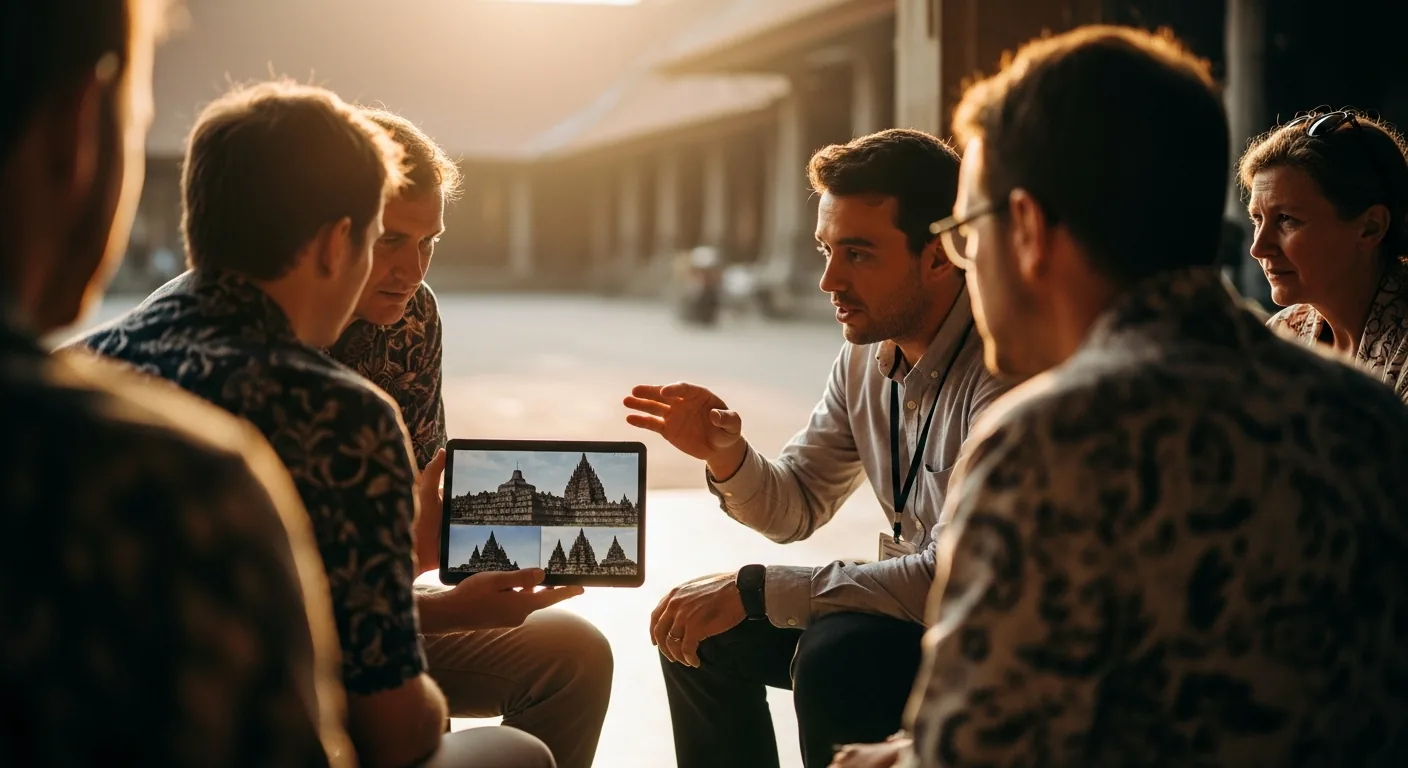
The air is cool and still, thick with the scent of damp earth and frangipani. It is 4:30 AM. Below, the Kedu Plain is a basin of darkness, but here, on the upper terraces of Borobudur, a quiet anticipation builds. You are not just a visitor; you are a witness. As the first light spills over the peak of Mount Merapi, illuminating 72 latticed stupas and the serene face of the Buddha, you realize that experiencing a place of this magnitude is not a passive act. It requires participation, a conscious effort to move with respect and understanding. The challenge for the discerning traveler is how to navigate these deeply spiritual landscapes—from ancient temples to the living Sultan’s palace—without leaving the wrong impression, how to capture their profound beauty without disturbing their sanctity. See also: see Yogyakarta Travel Package’s About.
This is the central question for anyone undertaking a meaningful Java cultural package. It’s about more than just seeing the sights; it’s about engaging with a culture that is both ancient and vibrantly alive. How does one dress? Where is a camera welcome? What are the unwritten rules of interaction? Here, we address these critical points, ensuring your exploration of Yogyakarta is as respectful as it is enriching. See also: book Contact.
Dressing for Divinity: Temple Attire at Borobudur and Prambanan
The dress code at Yogyakarta’s UNESCO World Heritage sites is the first and most visible sign of respect. Both Borobudur, the world’s largest Buddhist temple constructed in the 9th century, and Prambanan, the magnificent 9th-century Hindu complex, are active places of pilgrimage and worship. Modesty is paramount. For both men and women, this means ensuring shoulders and knees are covered. Lightweight, long-sleeved shirts made from linen or cotton and loose-fitting trousers or long skirts are ideal for heat while adhering to protocol. See also: book Borobudur Sunrise Tour.
The key garment is the sarong. At the entrance to both temple complexes, visitors who are not appropriately dressed will be required to wear one. This service is typically included in the foreign tourist entrance fee, which as of 2023 is approximately $25 USD (IDR 455,000) for each site. The provided sarongs are simple, often in a plain color or a basic stamped batik pattern. While convenient, we recommend a more considered approach for clients of our Yogyakarta Travel Package. Purchasing your own high-quality batik sarong from a reputable market like Pasar Beringharjo (prices range from $5 to $50 USD depending on the craftsmanship) not only ensures you have a beautiful and appropriate garment but also provides you with a tangible connection to Javanese craft. It becomes a functional part of your travel wardrobe and a sophisticated souvenir. Remember to secure it properly; it should be wrapped snugly around the waist and cover your ankles.
The Art of Observation: Sultan’s Palace with Respect
The Keraton Ngayogyakarta Hadiningrat, or Sultan’s Palace, is not a static museum. It is the living heart of the city and the official residence of Sultan Hamengkubuwono X. Built in 1755, its protocol reflects its dual role. When you enter its courtyards, you are a guest in a royal domain. Your conduct should reflect this. The most important figures to be aware of are the abdi dalem, the loyal palace retainers who dress in traditional Javanese attire and move with a quiet, deliberate grace. Do not impede their path or demand their attention for photographs; observe them from a respectful distance.
Photography rules here are specific and strictly enforced. While you are generally free to photograph the architecture and public exhibits, flash photography is universally forbidden to protect delicate artifacts and artworks. In certain pavilions, especially those used for royal ceremonies or containing sacred objects (pusaka), all photography may be prohibited. Look for posted signs and follow the guidance of palace staff. A key point of etiquette is how you move through the space. Never sit on the edge of a pavilion platform or point your feet directly at performers during the daily gamelan or dance rehearsals. When speaking, use a lowered voice. The entrance fee is modest, around IDR 15,000 (approximately $1 USD), but the cultural currency of respectful behavior is invaluable. A well-planned yogya tour package will include a guide who can navigate these nuances for you.
A Photographer’s Guide: Capturing Java Without Compromise
Yogyakarta is a place of immense visual appeal, from the volcanic silhouettes framing Borobudur at dawn to the intricate reliefs of the Ramayana epic at Prambanan. For the serious photographer, capturing this requires more than technical skill; it demands cultural sensitivity. The iconic borobudur sunrise tour, which typically begins around 4:30 AM, offers the best light. However, be mindful that you are sharing this moment with hundreds of others. Tripod use can be restrictive; on the upper levels of Borobudur, they are often discouraged to prevent crowding and damage to the ancient stone. A monopod or a lens with good image stabilization is a more practical choice.
photographing people, permission is key. The concept of “asking” can be non-verbal—a simple smile and a gesture towards your camera is often enough. If someone declines, respect their wishes immediately. This is especially true when photographing artisans in batik workshops or sellers in the market. Many are happy to be photographed, but treating them as part of the scenery is dehumanizing. Dr. Soekmono, the Indonesian archaeologist who led the monumental UNESCO-backed restoration of Borobudur from 1973 to 1983, emphasized the site’s living spiritual importance. This is the perspective to adopt with your camera. Drone photography is strictly prohibited at all major archaeological sites without special, difficult-to-obtain permits. A successful photographic expedition in Java is one that documents beauty with integrity. See also: see Yogyakarta Travel Package’s Home.
Transactions and Tipping: The Financial Etiquette of Yogyakarta
While credit cards are accepted in larger hotels and upscale restaurants, Yogyakarta’s economy largely runs on cash. The official currency is the Indonesian Rupiah (IDR). It is advisable to carry a sufficient amount of smaller denomination notes (IDR 10,000 to IDR 50,000) for daily purchases like water, snacks, or small souvenirs. For context, a complete meal of the local specialty, gudeg (jackfruit stew), can be found for as little as IDR 25,000 (~$1.60 USD).
Bargaining is expected and practiced in markets like the famous Jalan Malioboro, but it should be a friendly and respectful exchange, not an aggressive confrontation. A good rule of thumb is to start your offer at around 50% of the asking price and meet somewhere in the middle. Always keep the negotiation light-hearted. In artisan workshops or established galleries, prices are typically fixed. Tipping is not a widespread custom in Indonesia, but it is appreciated for good service.
- Restaurants: A service charge of 5-10% is often included in the bill at mid-range to high-end restaurants. If not, leaving a tip of a similar amount is a kind gesture.
- Drivers and Guides: For a private driver on a day-long prambanan tour, a tip of IDR 50,000 – 100,000 (~$3-$6 USD) is appropriate. For a knowledgeable guide who has enhanced your experience, IDR 100,000 – 150,000 is a generous acknowledgment.
- Hotel Staff: A small tip of IDR 10,000 – 20,000 for porters or housekeeping is sufficient.
Always present and receive money with your right hand, as the left hand is considered unclean in Indonesian culture.
Beyond the Temples: Etiquette for Batik Workshops and Local Interactions
A comprehensive java cultural package extends beyond monuments to include immersive experiences like a batik workshop. In places like Batik Plentong or other studios in the Giriloyo village, you will interact directly with artisans whose skills have been passed down for generations. The creation of handmade batik, or batik tulis, is a painstaking process that can take weeks or even months for a single piece of cloth. When participating in a workshop, listen intently to your instructor and handle the tools, such as the canting (a pen-like tool for applying wax), with care. Show genuine interest in the process and the meaning behind the patterns.
General social etiquette is also important. Javanese culture is famously polite and indirect. Avoid raising your voice or showing strong public displays of affection. The concept of jam karet, or “rubber time,” means that punctuality can be more flexible than in Western cultures, though for scheduled tours and appointments, it is best to be on time. Learning a few basic phrases in Bahasa Indonesia will be warmly received:
- Terima kasih (te-ri-ma ka-sih): Thank you
- Permisi (per-mee-see): Excuse me (for passing by someone)
- Selamat pagi/siang/sore/malam: Good morning/day/afternoon/evening
These small efforts demonstrate a level of engagement that elevates your experience from that of a mere tourist to a welcome guest.
Comparing Cultural Tour Options: A Curated Approach
Choosing the right tour structure can significantly impact the quality and cultural sensitivity of your visit. A standard tour may cover the main sites, but a curated package focuses on the depth of the experience. The table below illustrates the difference in approach for a visit to Central Java.
| Feature | Standard Tour Operator | Yogyakarta Travel Package (Curated) |
|---|---|---|
| Guide | Licensed but may have large group sizes; script-based commentary. | Private, university-educated guide with expertise in Javanese history and culture. |
| Temple Attire | Relies on standard-issue temple sarongs at the entrance. | Provides a high-quality, locally sourced batik sarong for you to use and keep. |
| Batik Experience | A brief visit to a large, commercial batik factory store. | A private, hands-on workshop with a master artisan in a traditional village studio. |
| Transportation | Shared coach or large van, fixed itinerary. | Private, air-conditioned vehicle with a professional driver, allowing for itinerary flexibility. |
| Pacing | Rushed schedule, moving between sites with minimal context. | Leisurely pace focused on absorption and understanding, incorporating quiet moments for reflection. |
Your Action Plan for a Culturally Astute Java Experience
To ensure your visit to Yogyakarta is both memorable and respectful, consider these final action items. They are simple steps that reflect a deeper understanding of Javanese culture and will enrich your interactions at every stage of your journey.
- Prepare Your Wardrobe: Pack at least one outfit consisting of long trousers or a long skirt and a shirt that covers your shoulders. This will serve you well not just for temples but for any formal setting.
- Practice a Few Phrases: Master the basic greetings and “thank you” in Bahasa Indonesia. This small effort breaks down barriers and is always appreciated.
- Adopt a “Right Hand” Policy: Make a conscious effort to use only your right hand for greeting, giving, receiving, and eating. Tuck your left hand away when not in use.
- Research Before You Photograph: Understand the specific photography rules for each site you plan to visit, particularly the Sultan’s Palace and the interior sections of temples.
- Consult with an Expert: Engage with a travel specialist to design a java cultural package that aligns with your interests and ensures all logistical and cultural nuances are handled professionally.
Design Your Bespoke Yogyakarta Itinerary
Engage with Java’s profound culture with the guidance and expertise it deserves. Our specialists create tailored itineraries that include private guides, exclusive access, and authentic cultural encounters. Contact us to begin planning your visit.